
THE OBSERVATORY
The beginning can only be recorded once.
YEAR ZERO · 2026–27
The restoration of a landscape can continue for decades. Its beginning can only be recorded once.
The Observatory is the long-term ecological and documentary record of From Stone To Sky: a 65-acre landscape in the Wye Valley National Landscape undergoing a programme of habitat restoration.
Through ecological research, wildlife monitoring, photography, film, sound and long-term observation, we are documenting the landscape before, during and after intervention — creating a record of how it changes over time and creating a baseline against which future change can be understood.
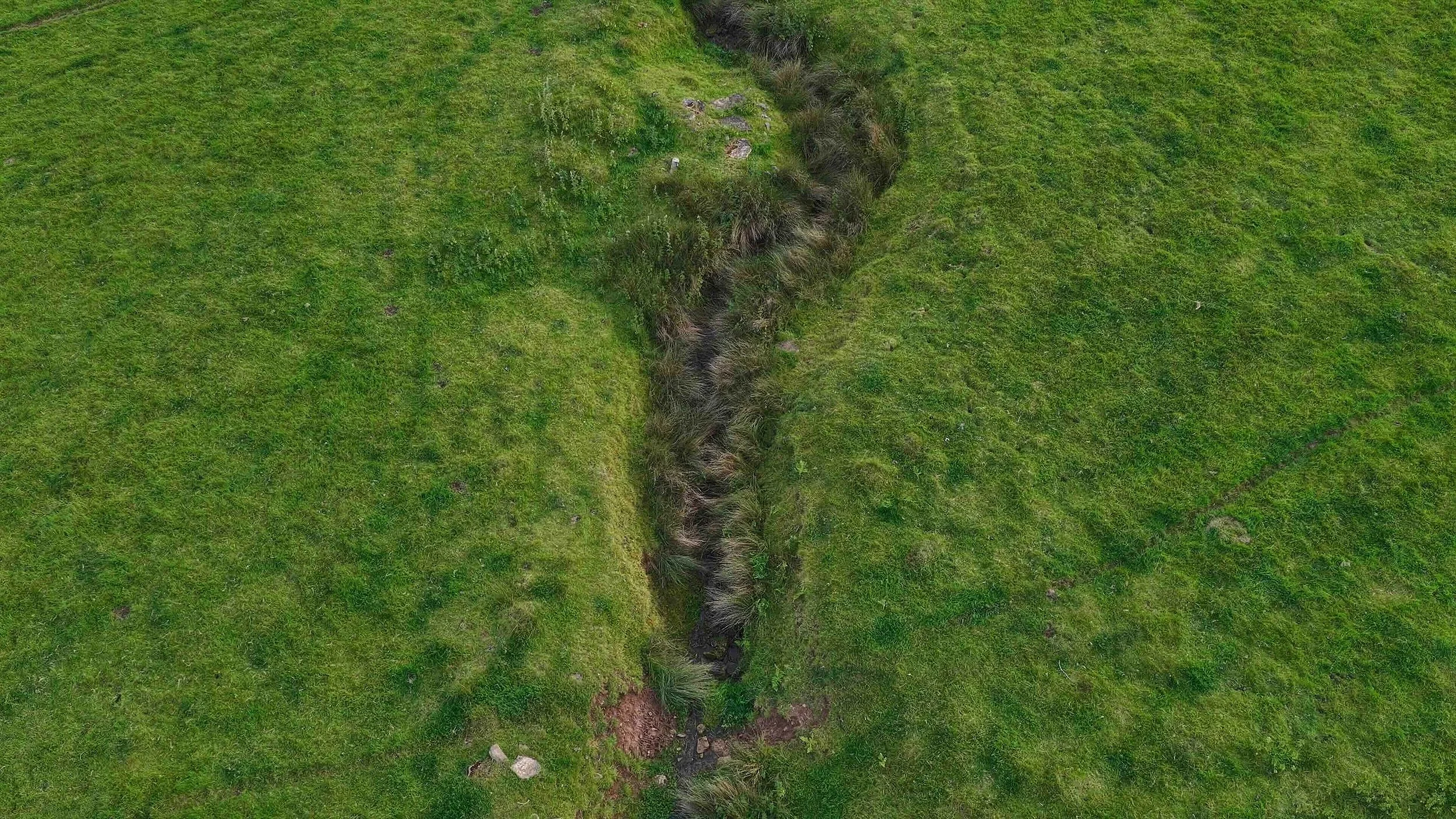
YEAR ZERO
From Stone To Sky begins with what is already here.
What can a landscape tell us about its recovery?
Botanical assessments, soil analysis, eDNA surveys, bio-acoustic monitoring, wildlife monitoring, aerial documentation and mapped landscape opportunities are forming the first layer of the record. Further biodiversity monitoring will build on that baseline over time.
This is not a claim about what the landscape has become.
It is a record of where it began.
WHAT WE ARE RECORDING
Landscape
Meadow, woodland, water, trees, buildings, seasonal change and habitat condition.
Ecology
Plants, soil, water, birds, bats, moths and, as monitoring develops, other species and wildlife.
Sound
Seasonal and environmental recordings from across the estate.
Image
Fixed photography, aerial imagery and film documenting change over time.
Weather & Microclimate
Regional weather records and plans for on-site monitoring of rainfall, temperature, humidity, wind and local microclimatic conditions.
THE OBSERVATORY · 2026–27
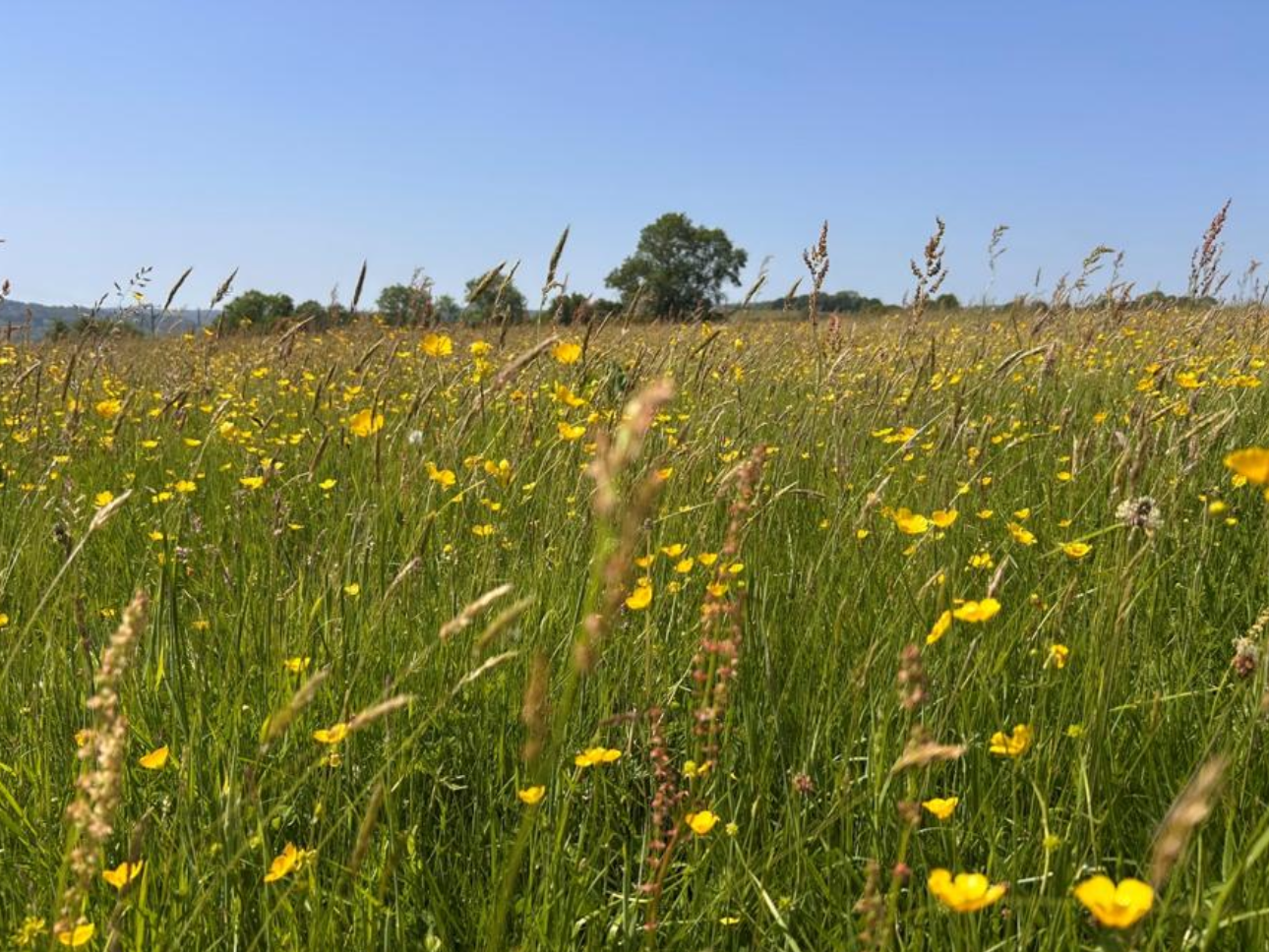
The landscape begins to speak.
ACOUSTIC MONITORING
The first evidence is being gathered.
September 2026 marked the beginning of a new chapter at From Stone To Sky.
On 15 September, Wilder Sensing installed four Wild Sense monitoring systems to begin establishing a long-term acoustic record of the landscape.
The monitoring programme encompasses four contrasting environments: the Great Meadow, where wildflower restoration is beginning; the site of a proposed shelterbelt; a stream corridor scheduled for future restoration; and a control site in the lower Wye Valley.
By recording ecological activity of birds, bats and moths across these environments, The Observatory aims to build a picture of how the landscape responds to restoration and management over the coming years.
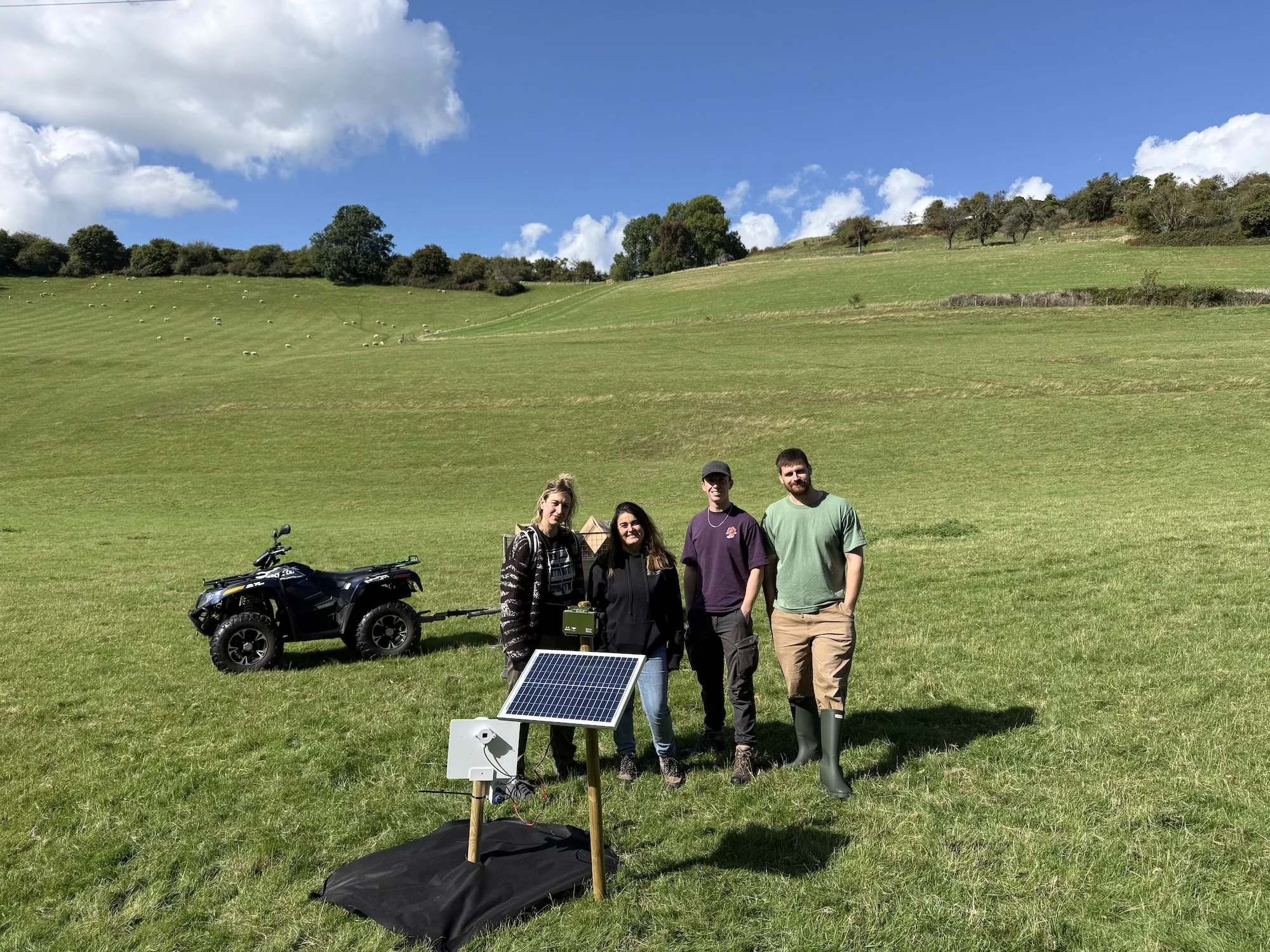
Wilder Sensing installation · control site · 15 September 2026
From left to right: Jemima Phillips, Molly Boyce, James Bell, George Carter
Reconnecting the old orchards.
RESTORING THE ORCHARDS
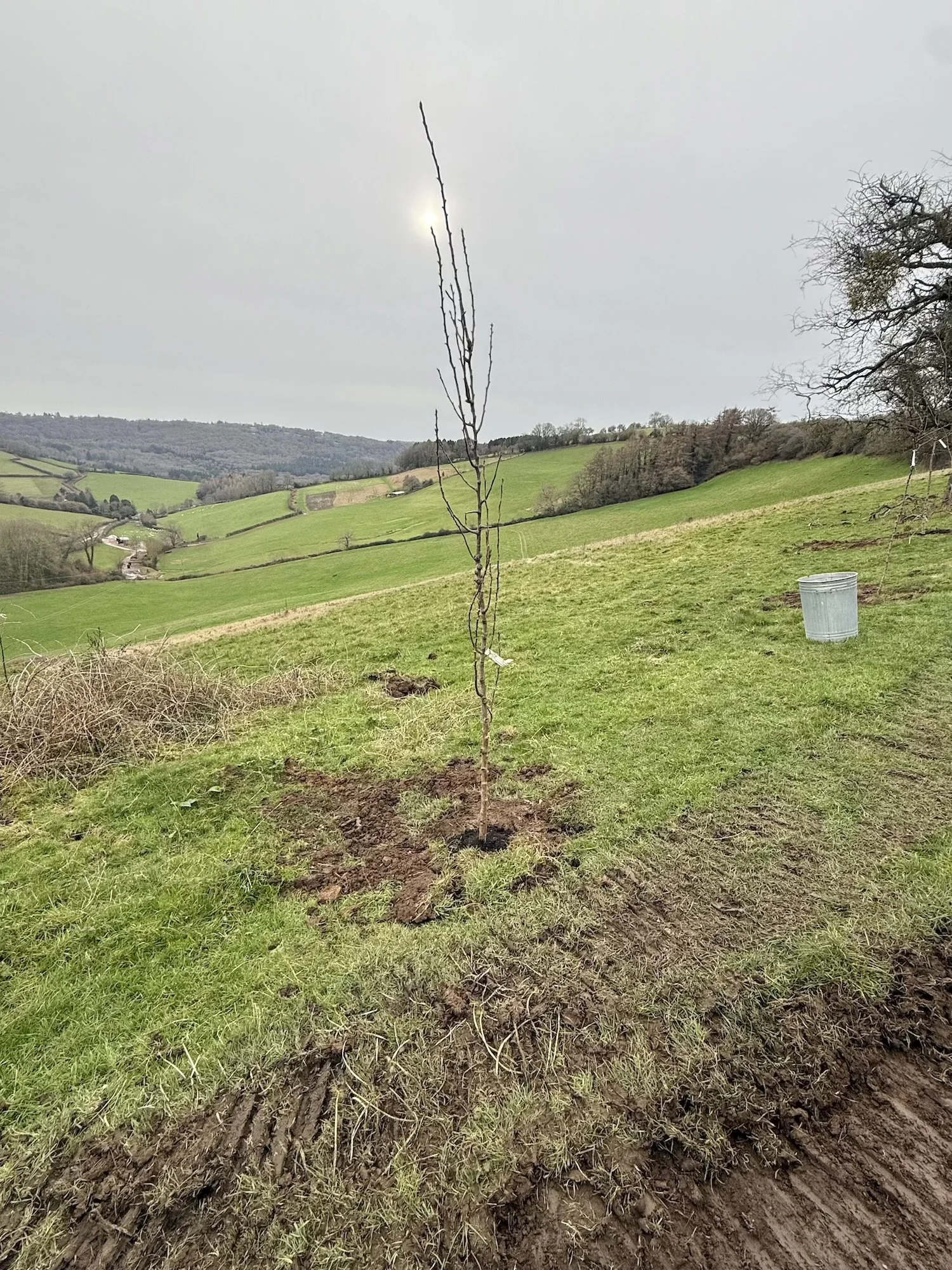
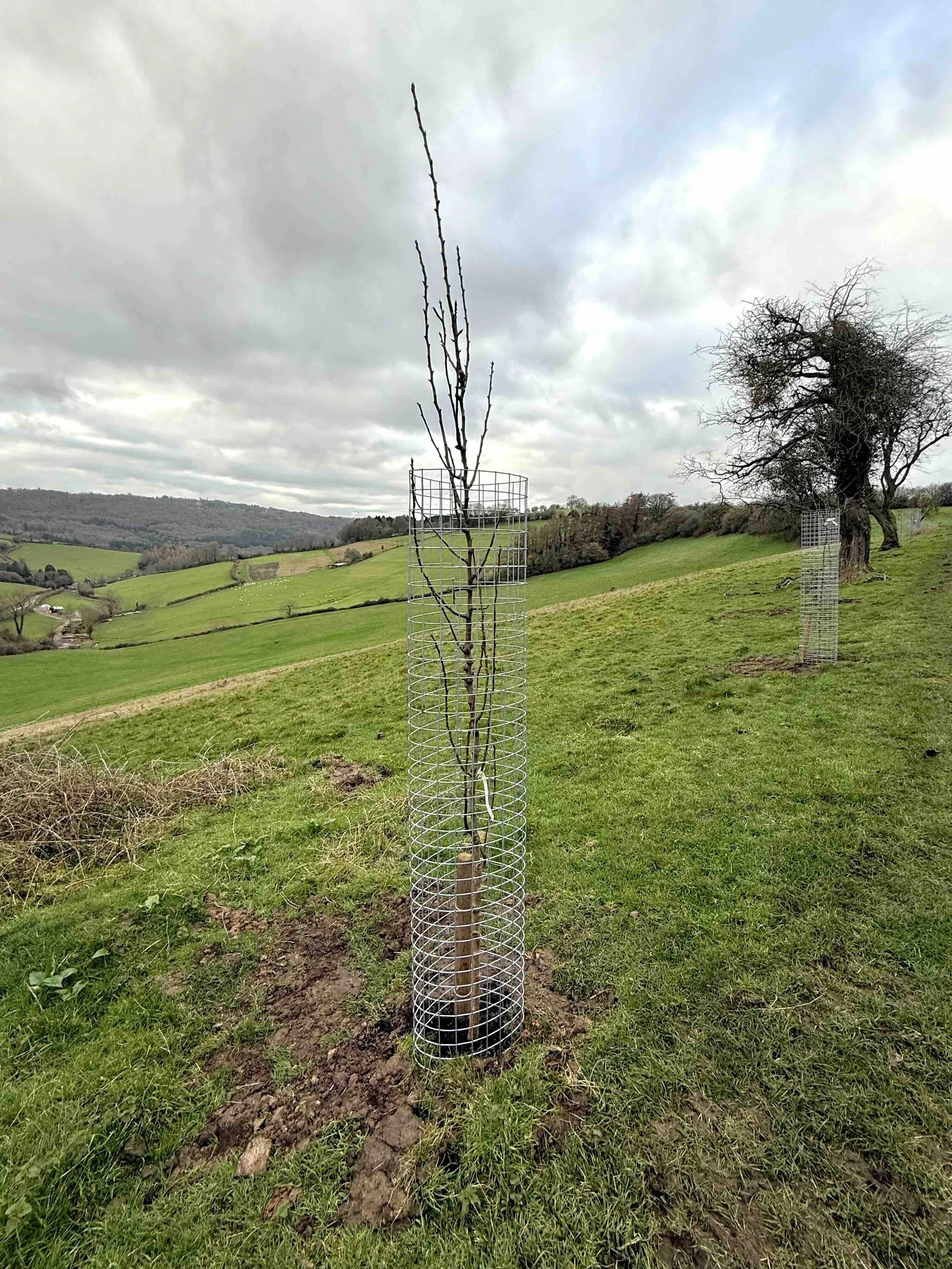
February 2026
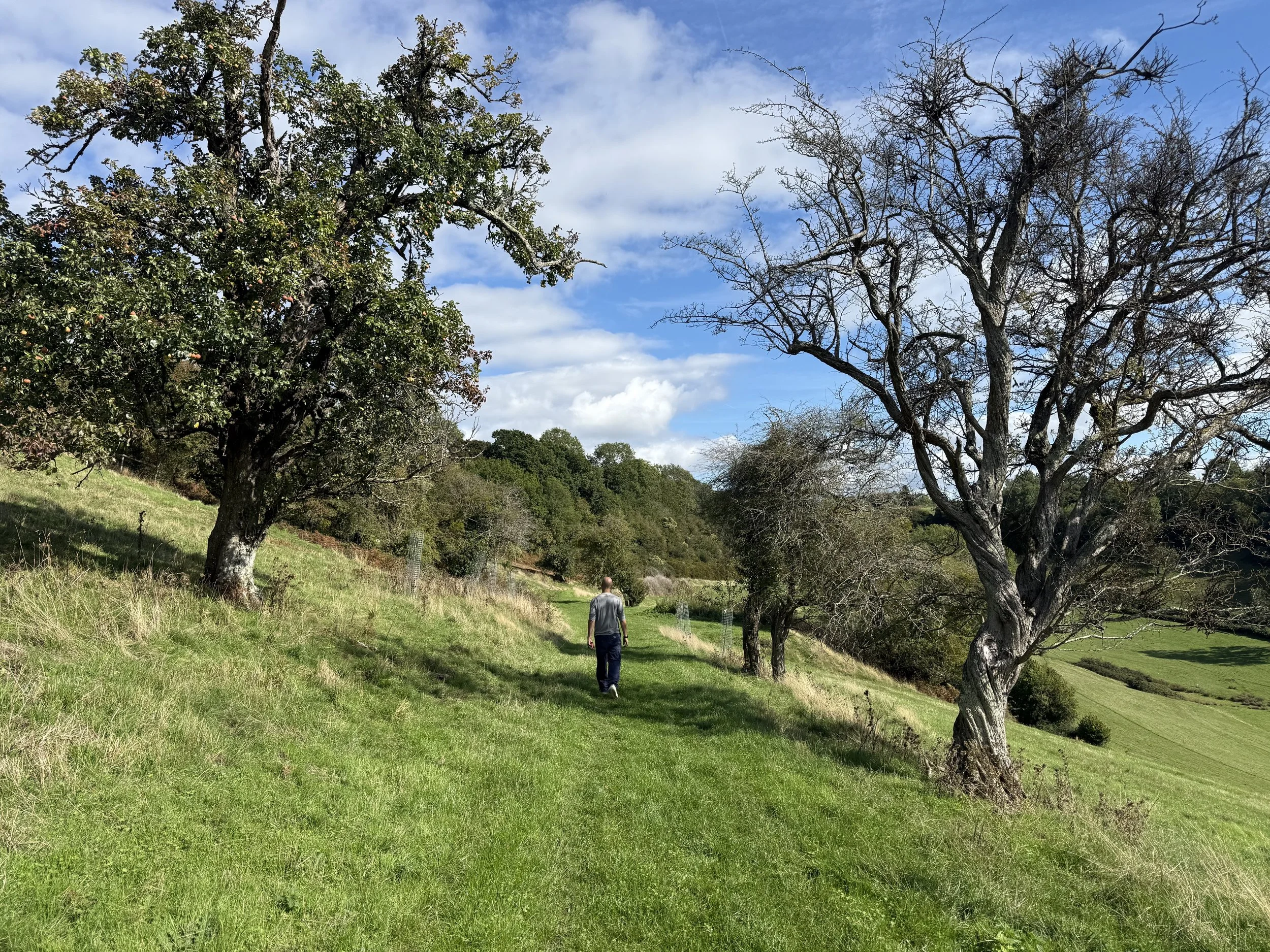
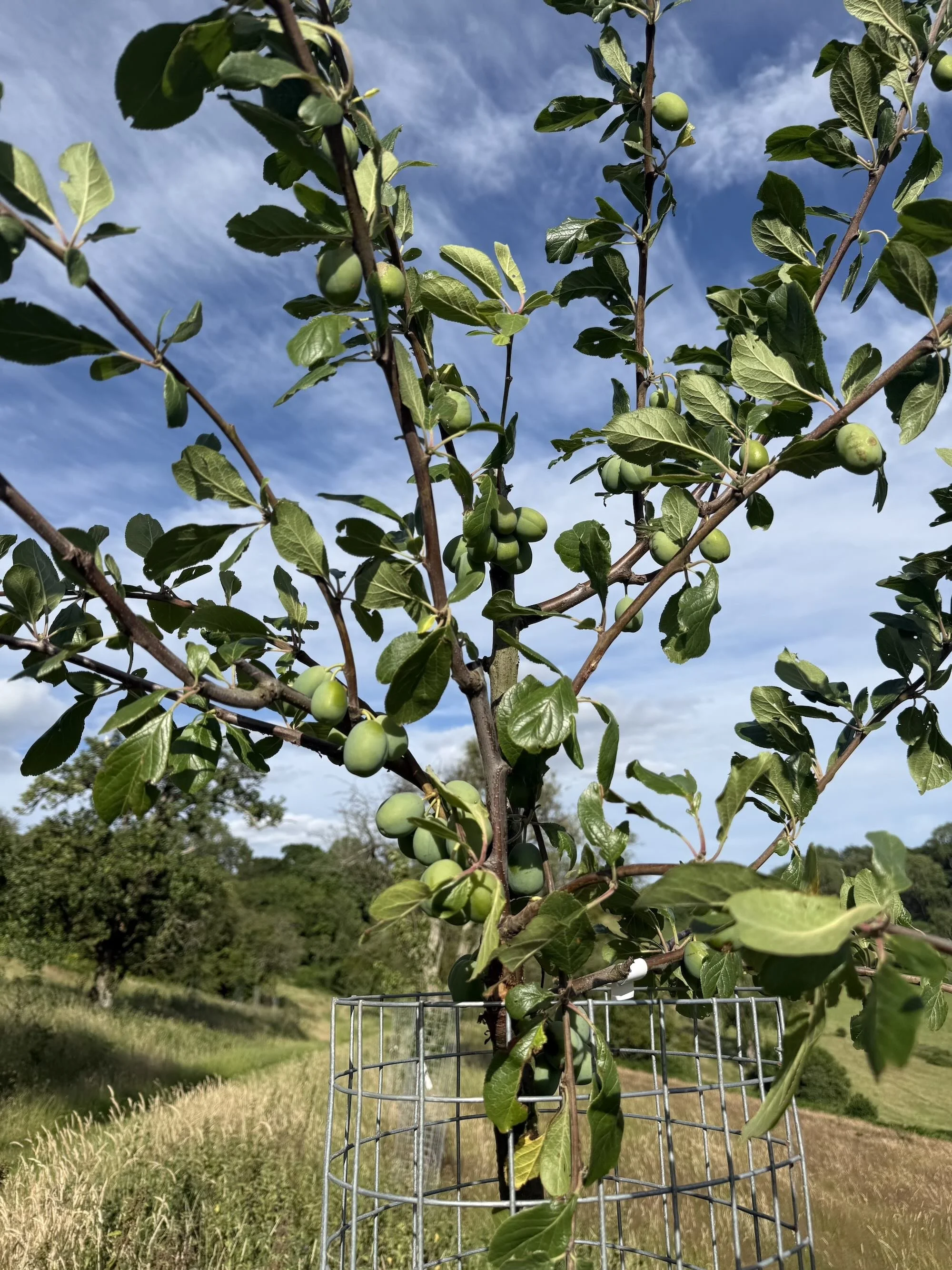
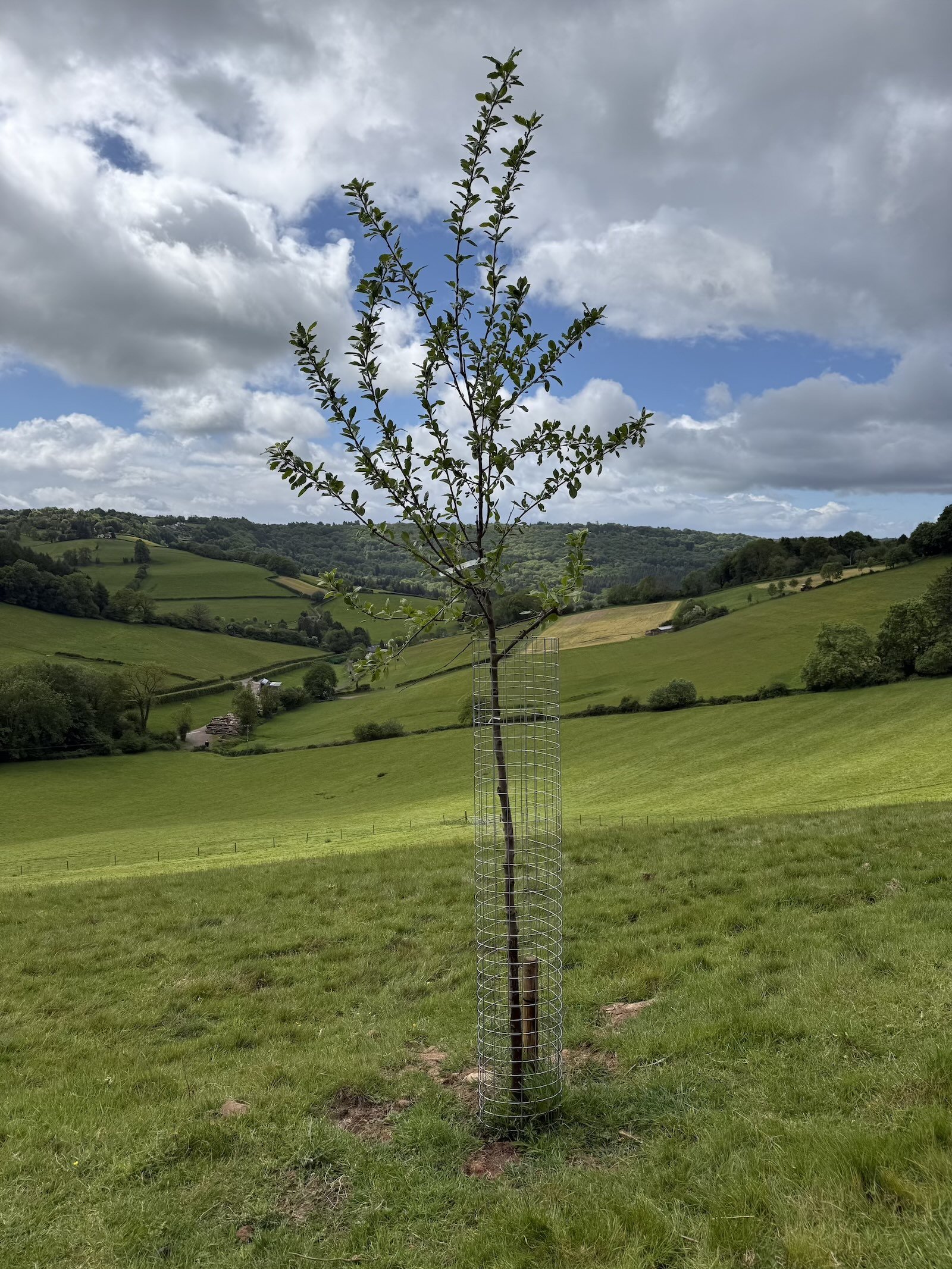
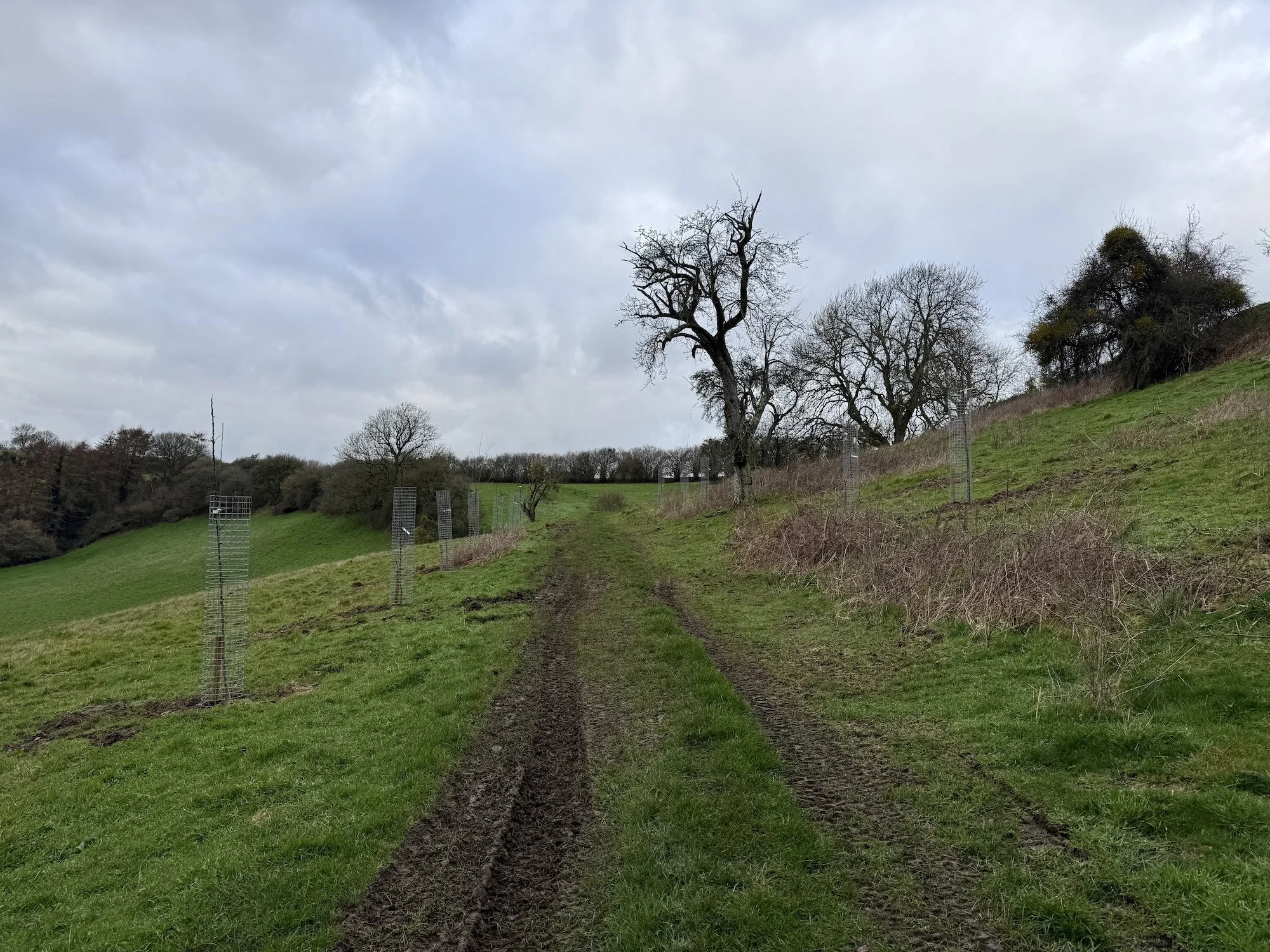
Twenty fruit trees were planted as the first step towards restoring the estate’s former orchards.
A mixture of Damsons, Russet apples, Comice pears and Conference pears has been introduced alongside the surviving ancient perry pear trees.
The planting aims to reconnect elements of the historic orchard landscape, improve habitat connectivity and provide additional flowering and fruiting resources for wildlife and pollinators.
As the trees establish, their development will form part of the estate’s long-term ecological and living archive record.
17th February 2026
From preparation to possibility.
MEADOW RESTORATION
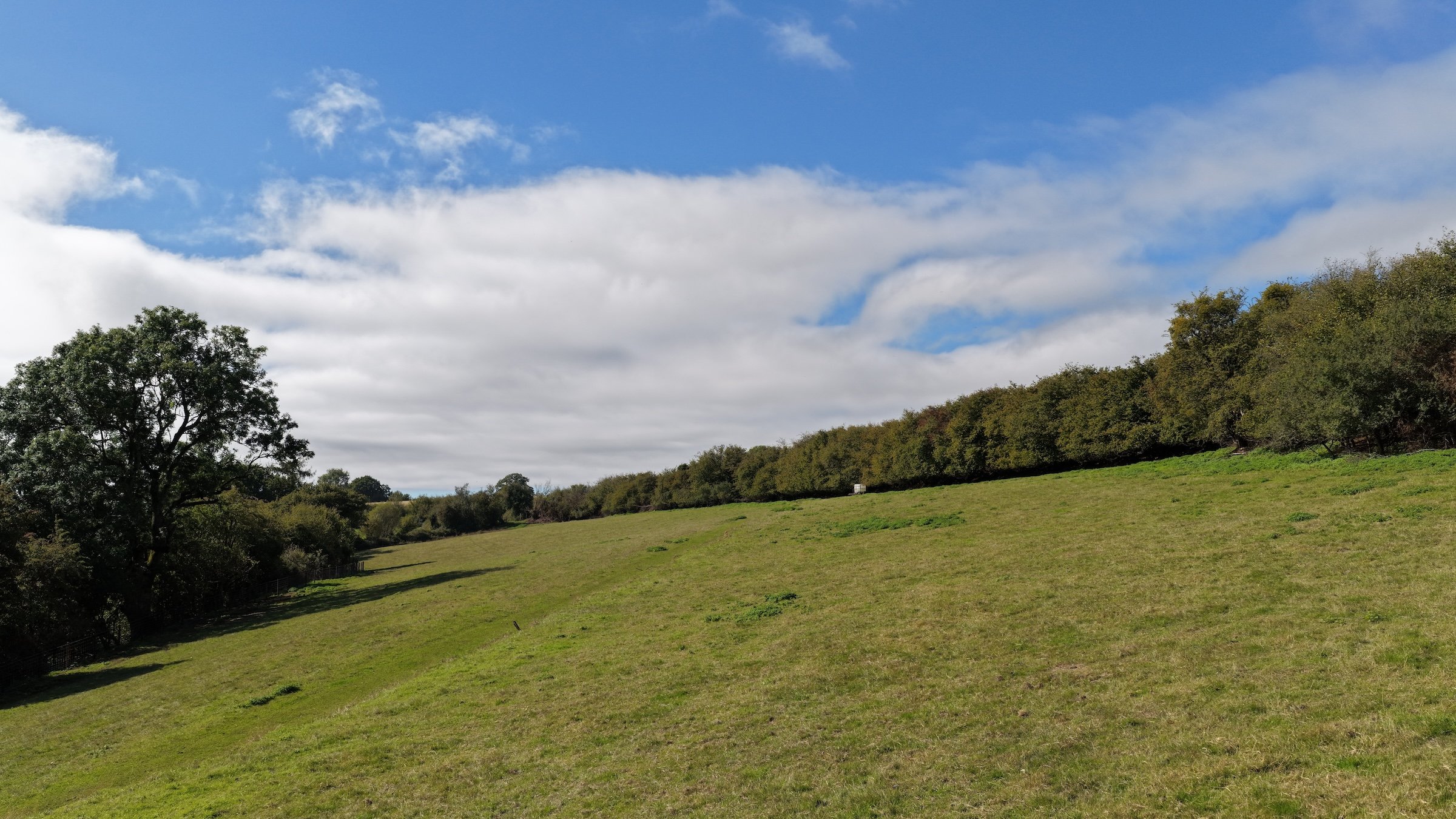
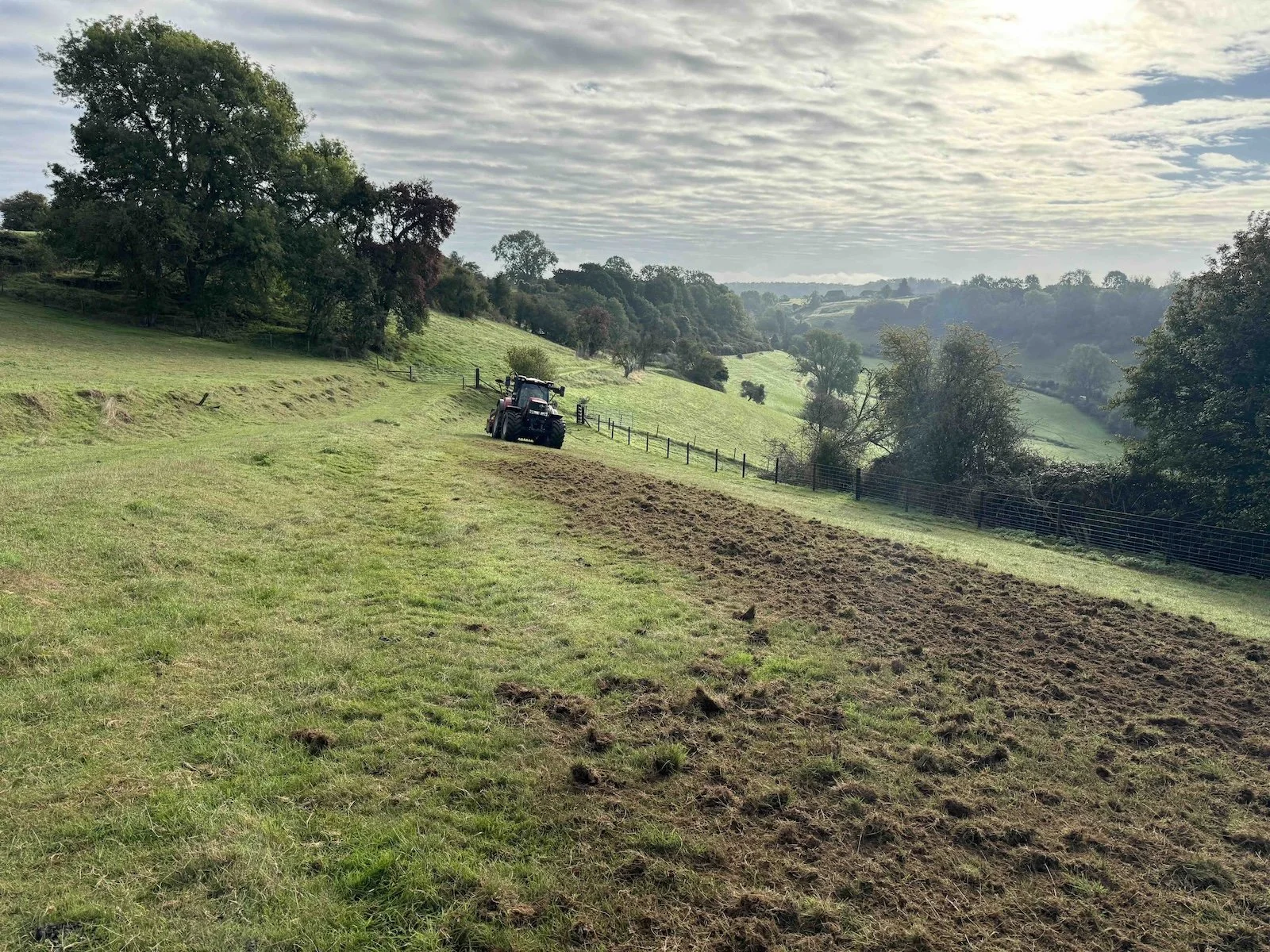
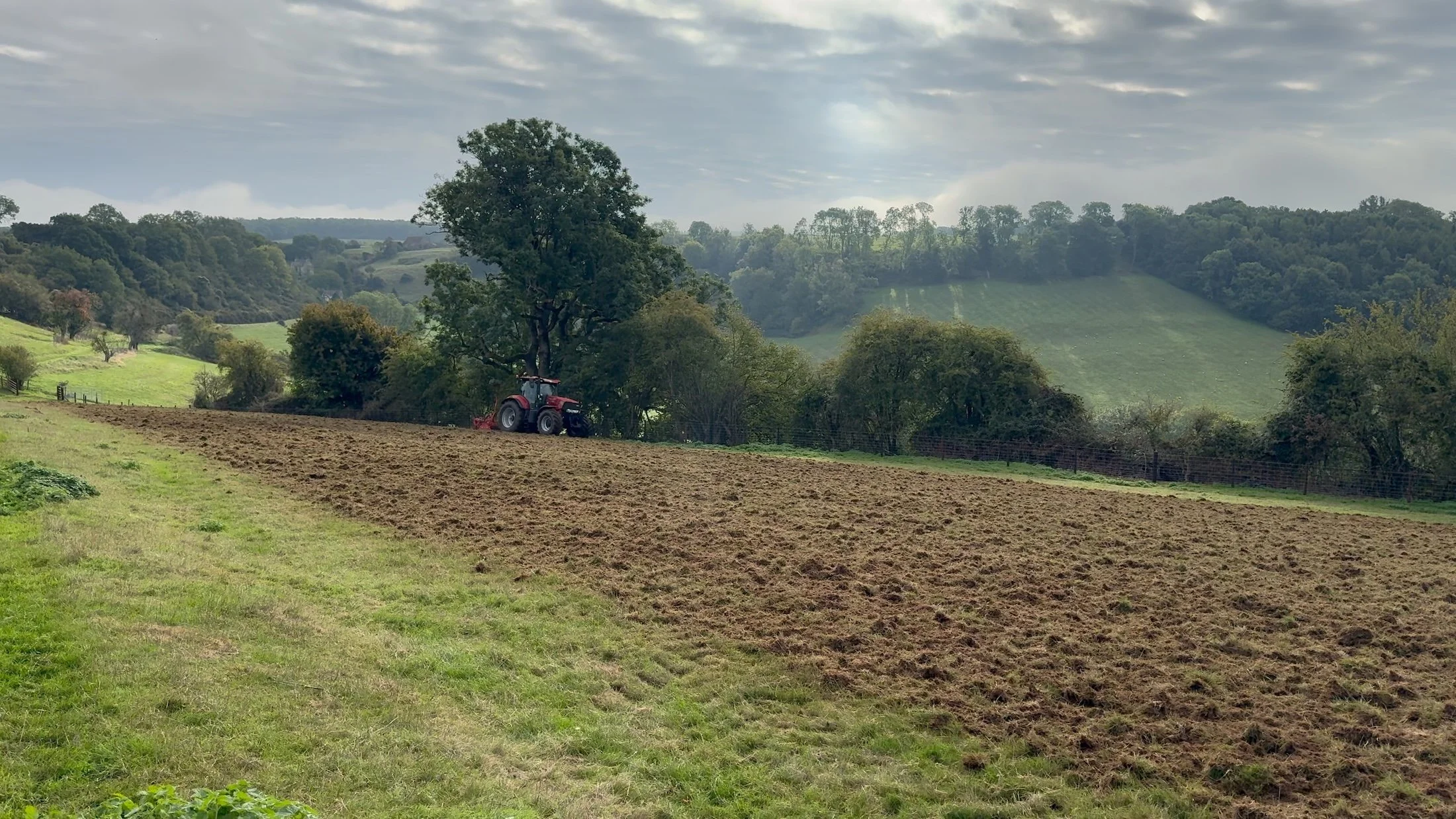
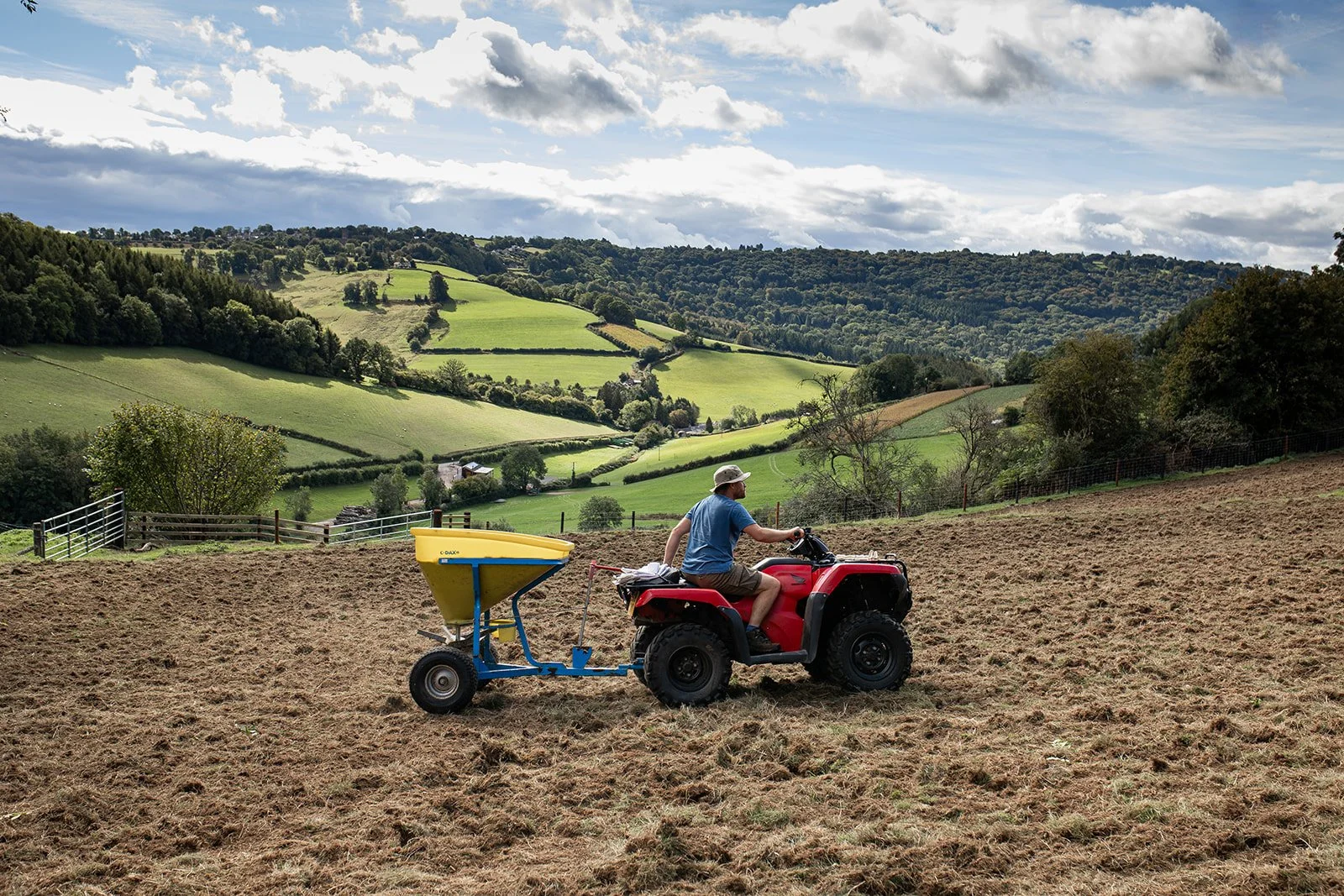
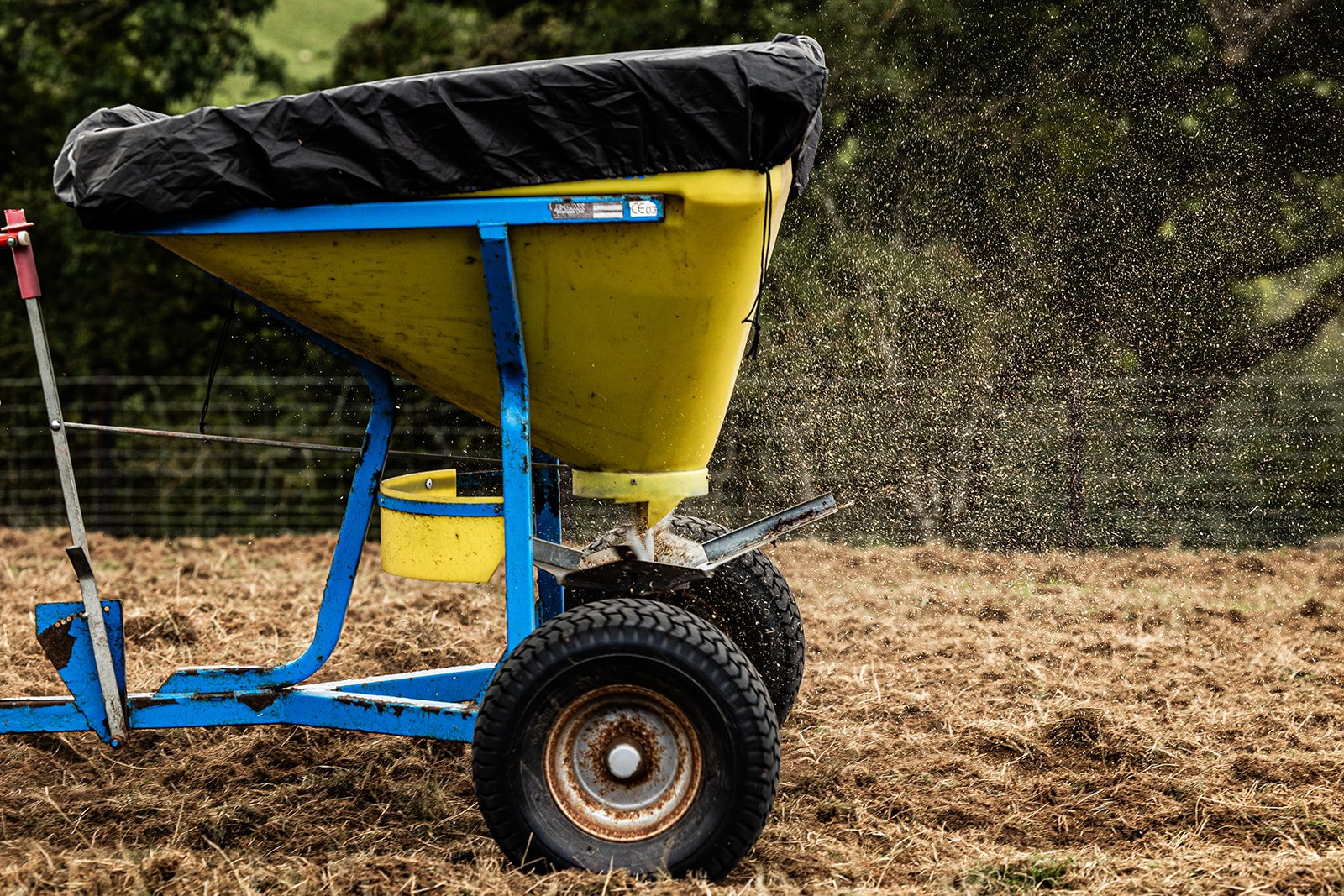
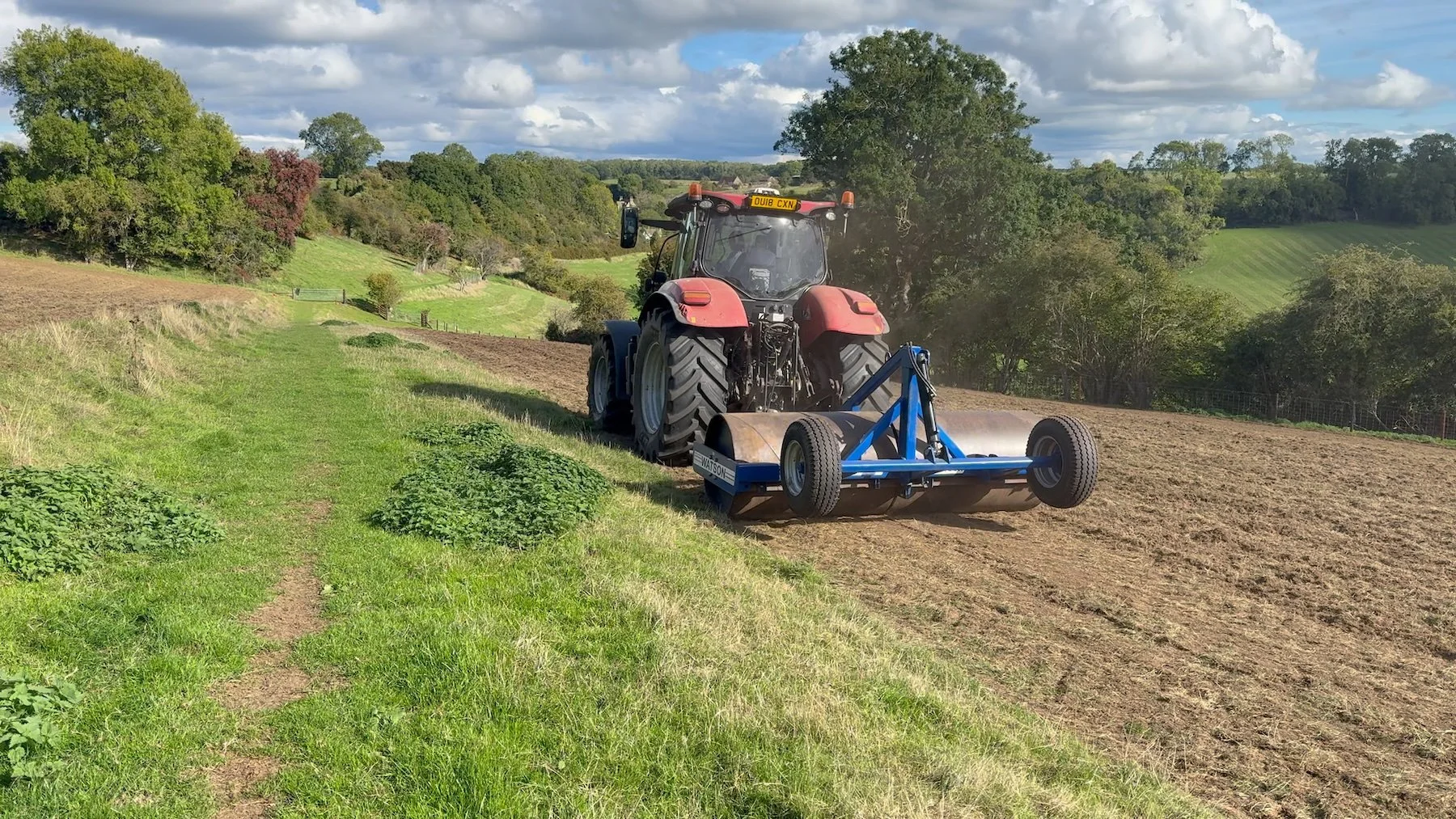
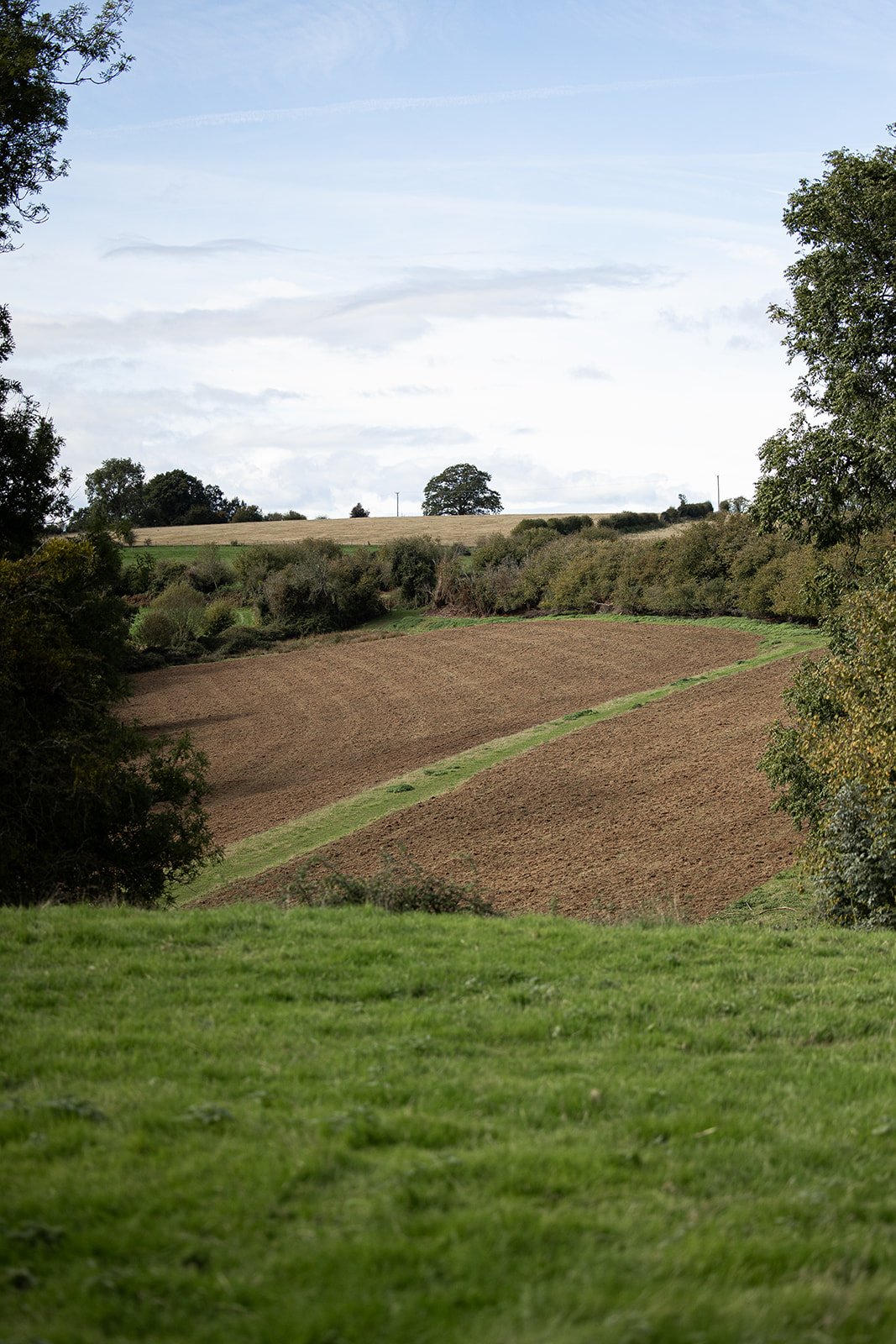
On 22 and 23 September 2026, the High Meadow was power-harrowed, seeded and rolled, marking the first physical stages of wildflower meadow restoration.
The work is being documented from the outset, preserving a visual and ecological record of the land as its transformation begins. Further meadow restoration is part of the autumn 2026 programme.
Across the estate, the wider restoration programme brings together wildflower meadows, new hedgerows and shelterbelts, woodland planting, traditional orchard restoration and the creation of wetland habitats. Twenty fruit trees — including damsons, russets, Comice and Conference pears — were planted in February 2026, beginning the reconnection of the estate’s former orchards with its surviving ancient perry pear trees.
Three proposed attenuation bunds, alongside potential ponds, scrapes and leaky dams, form part of a nature-based approach to managing water. By temporarily holding and slowing rainfall before it reaches local watercourses, these interventions aim to support wildlife, improve habitat connectivity and contribute to reducing flood risk further downstream in the River Wye catchment. Stream restoration is planned for 2027–2028.
The aim is not simply to create new habitats, but to understand what happens as they establish — what succeeds, what changes, and what can be learned.
Meadow restoration undertaken in partnership with Herefordshire Meadows and Ecohab.
A record that grows with the place.
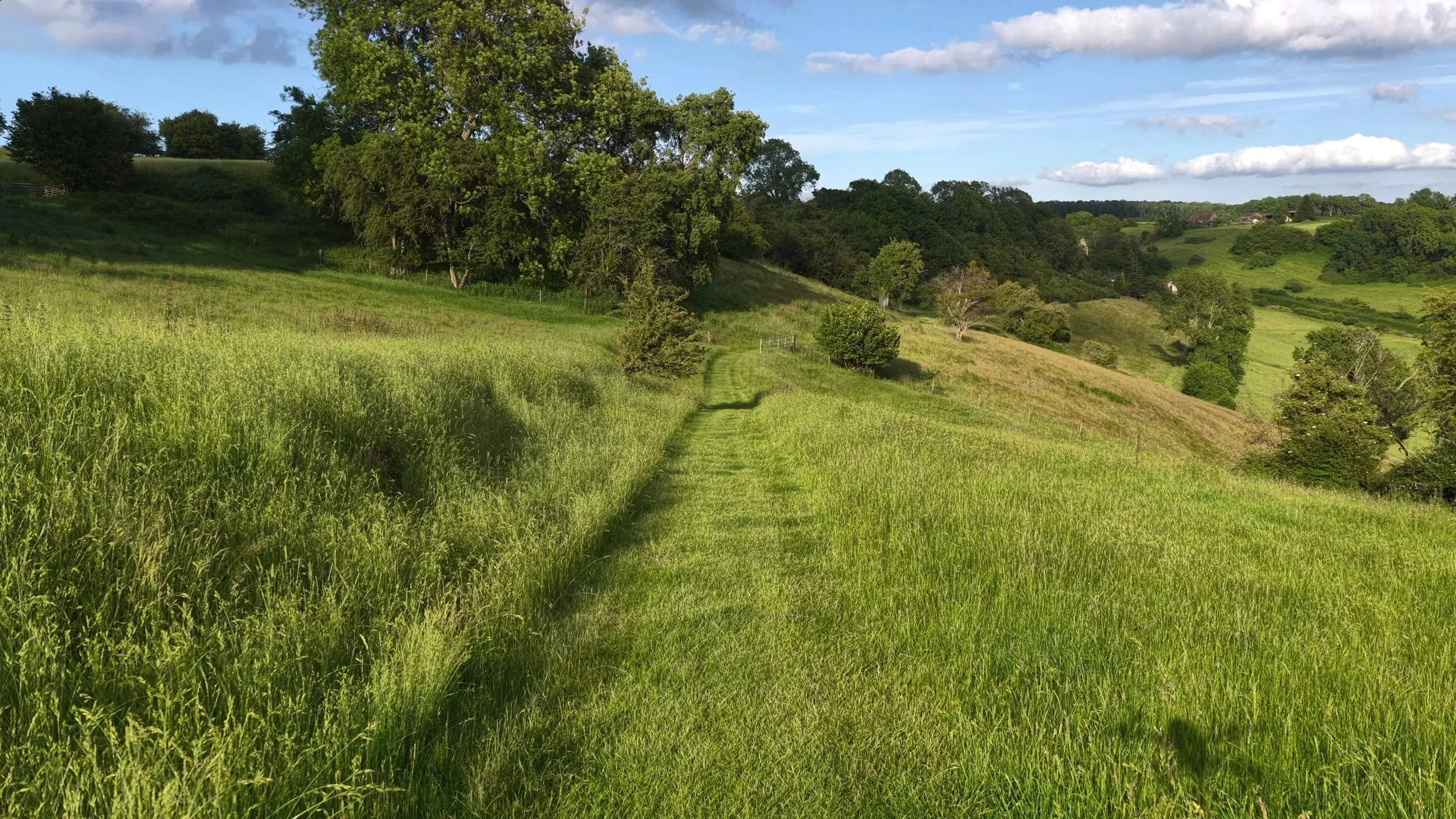
Landscape
Meadow, woodland, water, trees, buildings and changing land use.
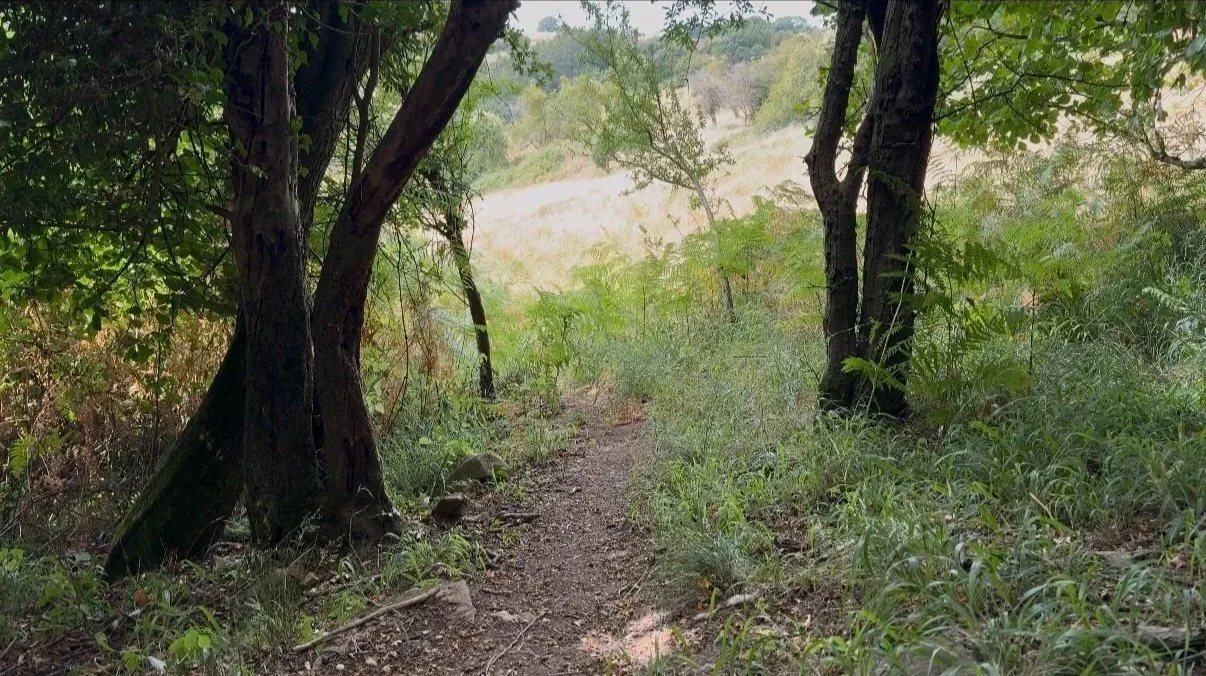
Sound
Seasonal and environmental recordings from across the estate.
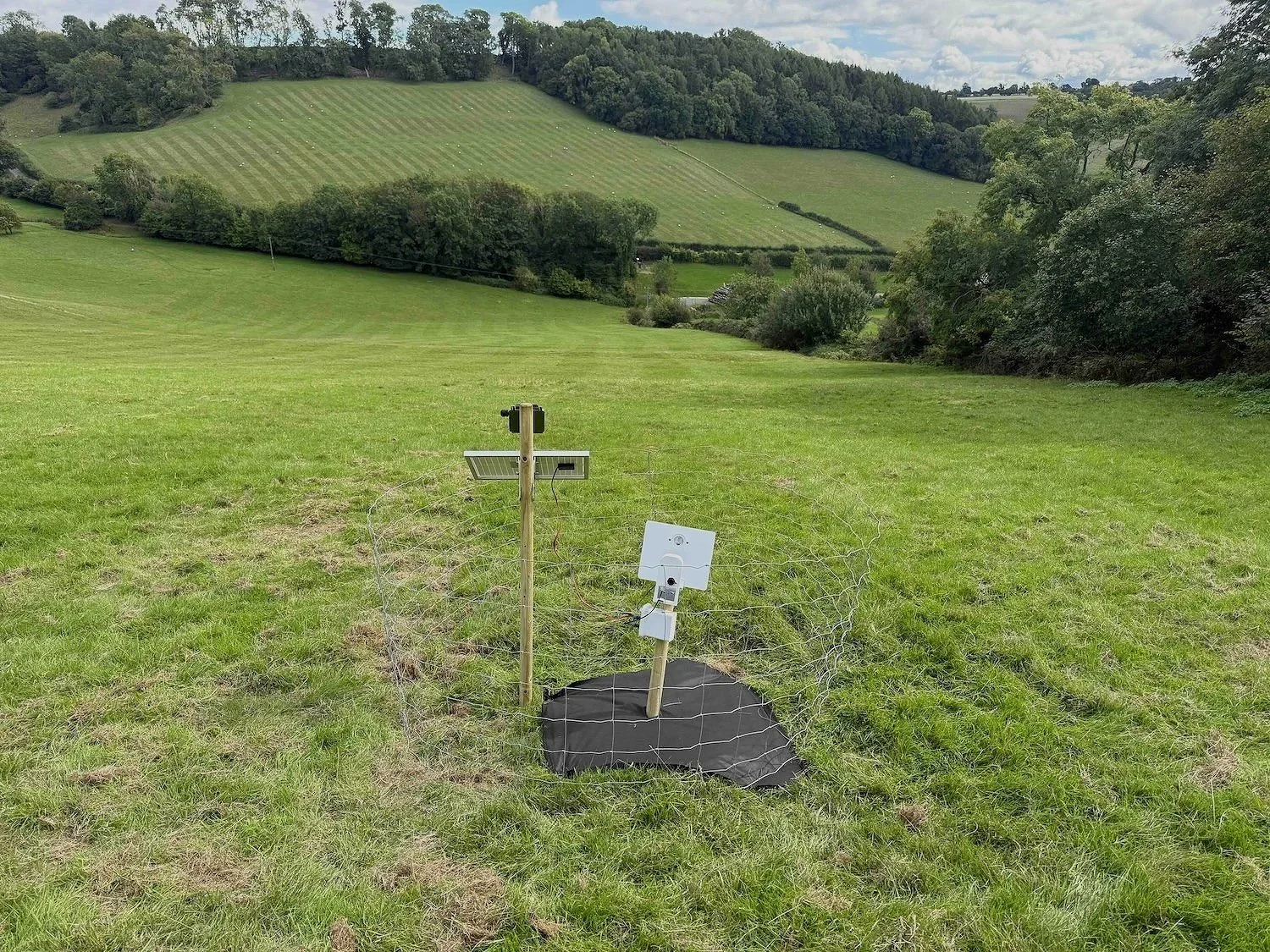
Ecology
Plants, soil, water, birds, bats, moths and, as monitoring develops, other wildlife and species.
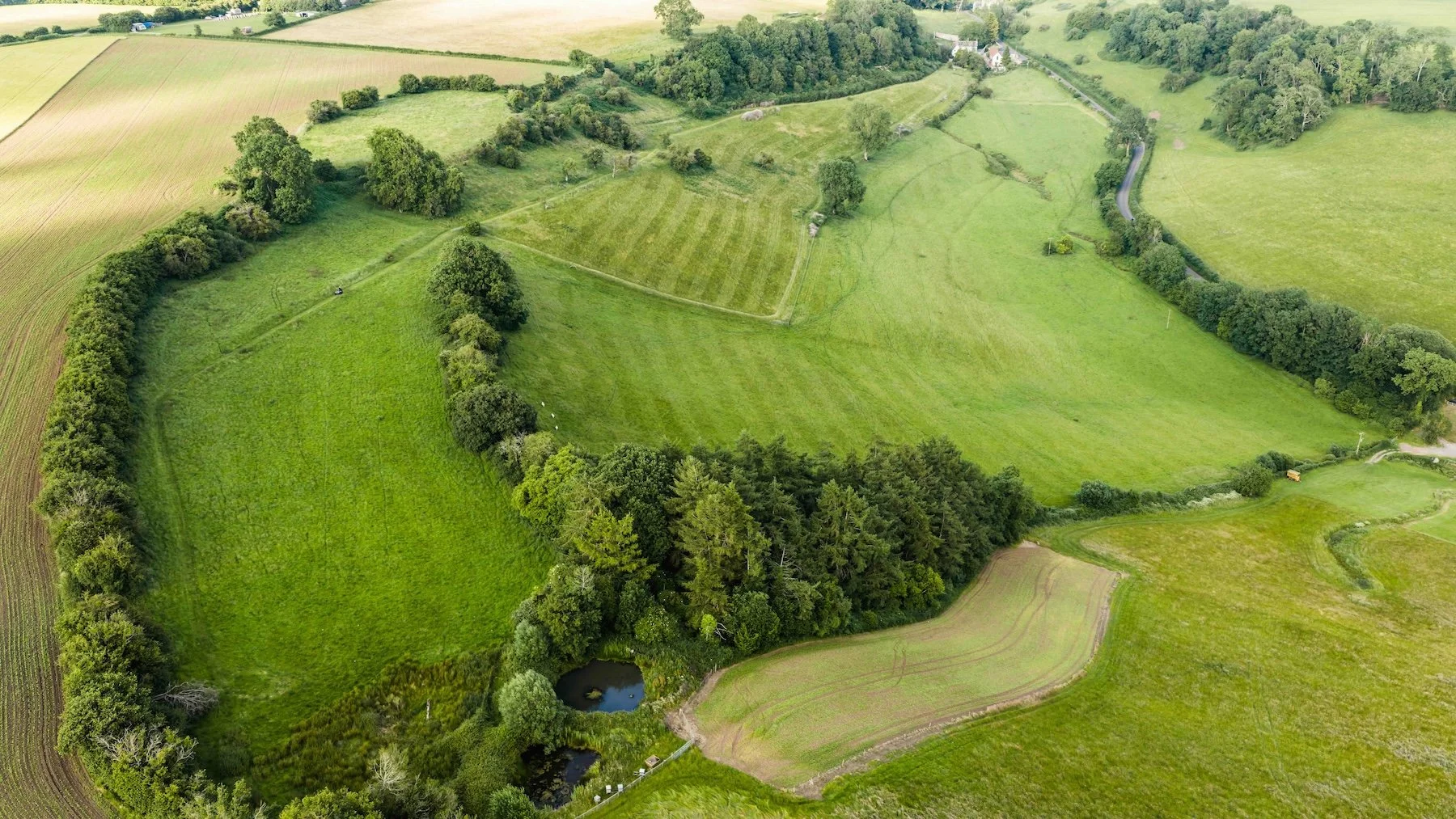
Image
Fixed photography, aerial imagery and film documenting change over time.
A landscape recorded through time.
THE LIVING ARCHIVE
Returning to the same view. Again and again.
Alongside ecological monitoring, a visual record of the estate is already taking shape.
Fixed-point photography has begun, combining repeat drone flights with monthly landscape photographs.
Returning to the same viewpoints will allow changes in vegetation, habitat structure, seasonal conditions and restoration work to be seen over months, years and eventually decades.
Documentary stills, archival footage and illustrations are also being brought together to record the visible transformation of the landscape, the people involved in making it happen and the uncertainties, setbacks and unexpected discoveries that emerge through its long-term care.
RESEARCH & COLLABORATION
One landscape. Questions for generations.
The Observatory is being developed as a collaborative programme, bringing together ecological expertise, long-term monitoring and opportunities for academic research.
A proposal for MSc research projects, developed through the Wye Valley National Landscape and UWE Bristol, identifies From Stone To Sky as a potential setting for investigations into habitat restoration and ecological change.
Possible research areas include grassland establishment, biodiversity, soil health, water quality, habitat connectivity and comparisons between restored and control areas.
The intention is to create a landscape where restoration can be observed, questioned and studied over time — contributing to knowledge that extends beyond the estate itself.

EVIDENCE BECOMES ART
The landscape has a voice.
The Observatory records ecological change. The Living Score explores how that changing landscape might be heard.
Through field recordings, composition and emerging sound technologies, harpist and electronic composer Jemima Phillips is developing a long-term artistic response to the estate.
The ambition is to create an evolving musical work shaped by the sounds, rhythms and changing conditions of the landscape — a creative counterpart to The Observatory’s scientific and documentary record.